OceanEyeTech · Water safety · 7 min read
When technology meets the sea: exploring a smarter approach to water rescue
On the coast, minutes matter. When someone gets into difficulty in the water, rescue teams must make decisions with incomplete information, changing conditions and precious little time. Technology cannot replace trained people or sound judgement—but designed carefully, it may help them act with better information and reach people sooner.
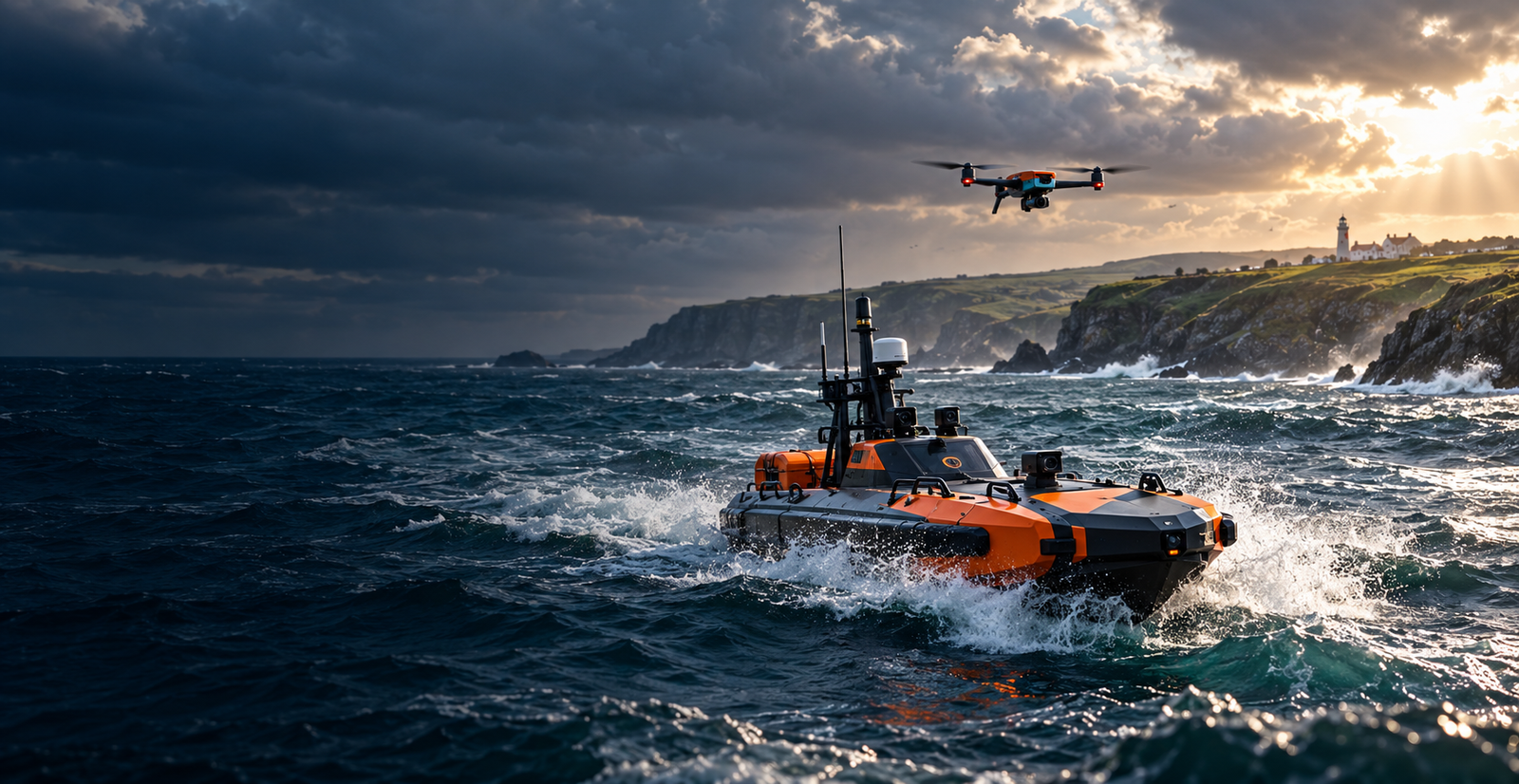
A practical problem, not a technology showcase
OceanEyeTech is an early-stage project exploring how connected maritime technology could support water-rescue operations. The ambition is simple: reduce the time between an incident being identified and meaningful help reaching the person who needs it.
That starts with understanding the people who do this work today—lifeguards, volunteer crews, coastguard teams and emergency services. Their experience should shape the system, not be an afterthought. Any useful solution must fit real operating procedures, work in difficult coastal conditions and remain understandable when pressure is high.
Building blocks worth exploring
The concept brings together several possible components: aerial drones for situational awareness, an unmanned surface craft designed to assist a person in the water, a station for deploying and maintaining equipment, and software to help teams coordinate information. Thermal imaging and resilient communications may be valuable where visibility or distance is a challenge. These are design directions to investigate and validate—not claims that a finished autonomous system is already in service.
The first step should be modest and evidence-led: speak with rescue professionals, map the operational requirements, test individual capabilities safely and measure whether they improve response. Human oversight, reliable communications, clear failure modes and compliance with maritime and aviation rules are fundamental from the start.
Why this matters in Ireland
Ireland’s coastline is part of its identity and a source of recreation, work and community life. It also demands respect. Better tools will never remove the risks of the sea, but well-designed technology may give rescue teams another way to assess a situation and support their response.
For ByBondar, OceanEyeTech reflects a broader belief: digital and engineering work is most meaningful when it addresses a real human need. The project is at an exploratory stage, and the next priorities are listening, collaboration and practical validation with the people who understand water rescue best.
Community · Schools · 5 min read
A good school website is more than a digital brochure
For a school or community organisation, a website is often the first place a parent, new resident, volunteer or potential supporter goes to understand what the organisation does. A clear, accessible website can make everyday information easier to find—and help the people behind the organisation spend less time answering the same questions.
Make the important things easy to find
Families need practical information: term dates, policies, contact details, enrolment guidance, notices and a sense of the school community. These should be easy to find on a phone, written in plain language and kept current. Accessibility matters too: readable text, sensible contrast, descriptive links and pages that work for people using assistive technology.
Technology should support the people doing the work
Many schools, clubs and community groups operate with limited time and budgets. A website should not create another complicated system to manage. The right approach is to agree who will update content, make common tasks straightforward and provide a short handover so staff or volunteers can confidently make routine changes themselves.
Good planning also protects privacy. Only collect information that is genuinely needed, explain how enquiries are handled, secure forms and accounts, and publish photographs or personal details only with appropriate permission. A professional-looking site is not enough if it is difficult to maintain or careless with people’s information.
Why offer support to schools and local groups?
Strong communities are built through many small contributions. Helping a school or local organisation improve its digital presence can make information more accessible, give its work a clearer voice and free up time for the people it serves. Where possible, ByBondar wants to contribute skills to community projects, including selected school website work, rather than treating every worthwhile project as just another commercial transaction.
That does not mean every organisation needs a large redesign. Sometimes a focused review, a better structure, improved mobile pages or a simple content plan is enough. The starting point is to listen, understand what people struggle to find and agree on a realistic improvement.
Local roots, useful digital tools
Wexford has schools, clubs, small businesses and community groups doing valuable work every day. They deserve digital tools that represent them well and are practical to maintain. ByBondar’s aim is to combine thoughtful design with hands-on technical support—so technology helps local people communicate, organise and connect.